Globally, the prevalence of Alzheimer’s disease and related dementia cases is rising at an alarming rate [1]. Combined with the toxic burden of modern life, chronic stress, and an aging population, the silent progression of this condition now affects almost every family. But are we truly helpless against this disease?
-
What Happens in the Alzheimer’s Brain? (Pathophysiology)
-
Why Do Conventional Treatments Fall Short?
-
Cellular Repair with Stem Cell and Exosome Therapies (SCET) in Alzheimer’s Disease
-
How Do Stem Cell and Exosome Therapies (SCET) Create Change in Alzheimer’s?
-
The MDTurkey Philosophy: Stop the Disease, Repair the Cells, Reverse the Damage
What Happens in the Alzheimer’s Brain? (Pathophysiology)
- What Happens in the Alzheimer’s Brain? (Pathophysiology)
- Why Do Conventional Treatments Fall Short?
- Cellular Repair with Stem Cell and Exosome Therapies (SCET) in Alzheimer’s Disease
- How Do Stem Cell and Exosome Therapies (SCET) Create Change in Alzheimer’s?
- The MDTurkey Philosophy: Stop the Disease, Repair the Cells, Reverse the Damage
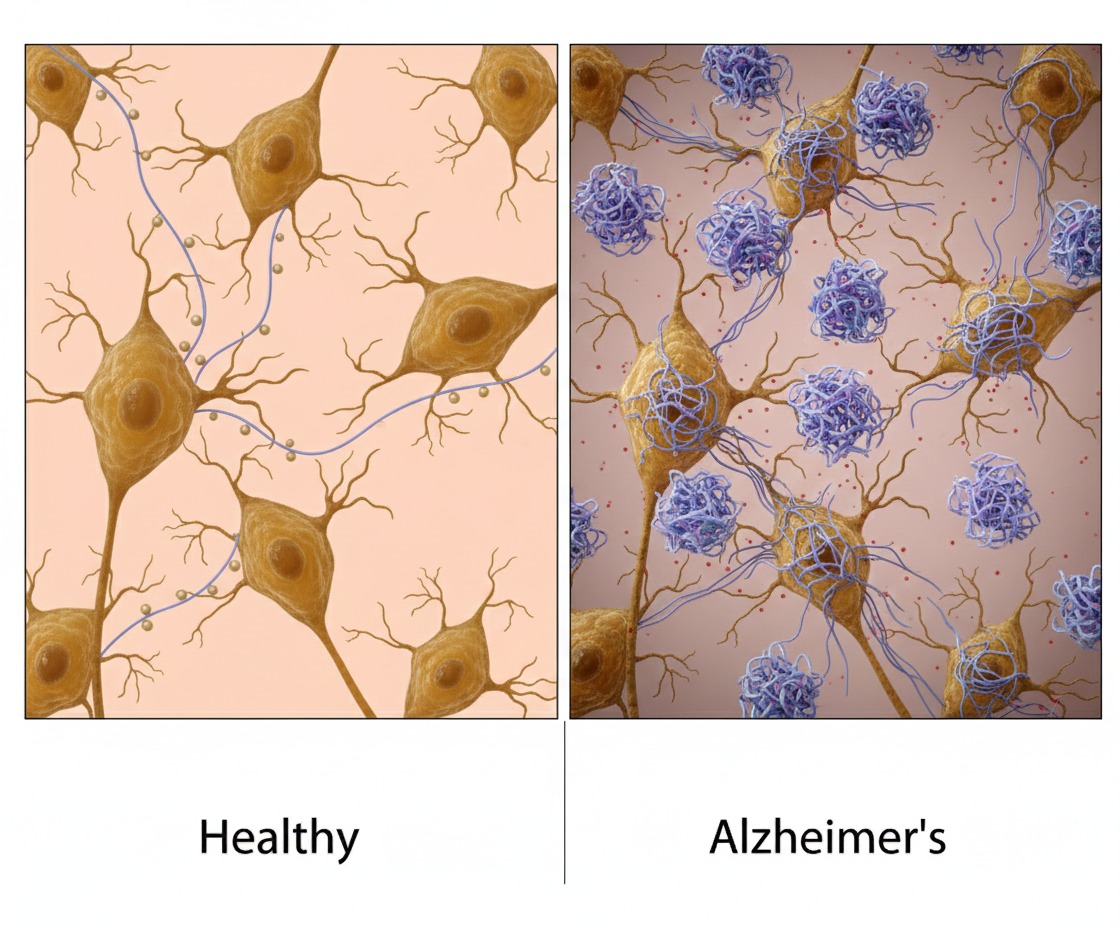
Think of Alzheimer’s as a library. The books (memories and information) are still there, but the shelves slowly begin to catch fire.
- Protein Accumulation: Harmful proteins known as Amyloid Beta and Tau build up in the brain, forming “plaques” and “tangles” that disrupt vital cell functions [2].
- Disruption of Cellular Communication: These plaques act like a wall, severing the connections between neurons (sinir hücreleri), leading to synaptic loss.
- Chronic Inflammation: The brain remains in a constant state of “fire” (inflammation) while trying to clear these foreign proteins. As documented in Nature Reviews Neurology, this neuroinflammation significantly accelerates the death of otherwise healthy cells [3].
Why Do Conventional Treatments Fall Short?
Most conventional Alzheimer’s medications available today are primarily designed to “mask symptoms” or merely “slow down the progression.” By supplementing depleted brain chemicals (such as acetylcholine), they aim to reduce the patient’s immediate forgetfulness [4].
However, the core issue remains: these drugs do not extinguish the inflammatory fire or rebuild the fallen shelves (neurons). The disease continues its progression in the background despite medication. This is where the limitations of traditional medicine end, and our regenerative medicine approach begins.

Cellular Repair with Stem Cell and Exosome Therapies (SCET) in Alzheimer’s Disease
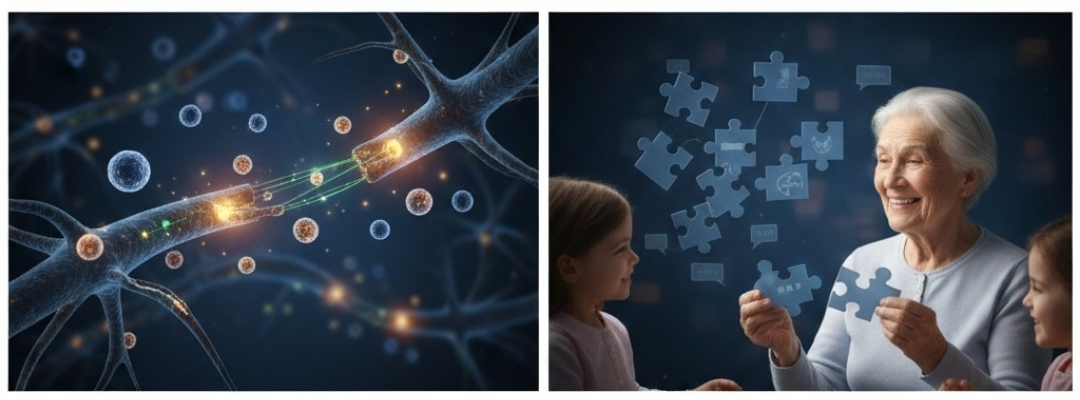
Stem Cell and Exosome Therapies (SCET) are not an “alternative” to Alzheimer’s treatment; they are the most powerful complementary force designed to complete the treatment cycle and aim to reverse the process.
How Do Stem Cell and Exosome Therapies (SCET) Create Change in Alzheimer’s?
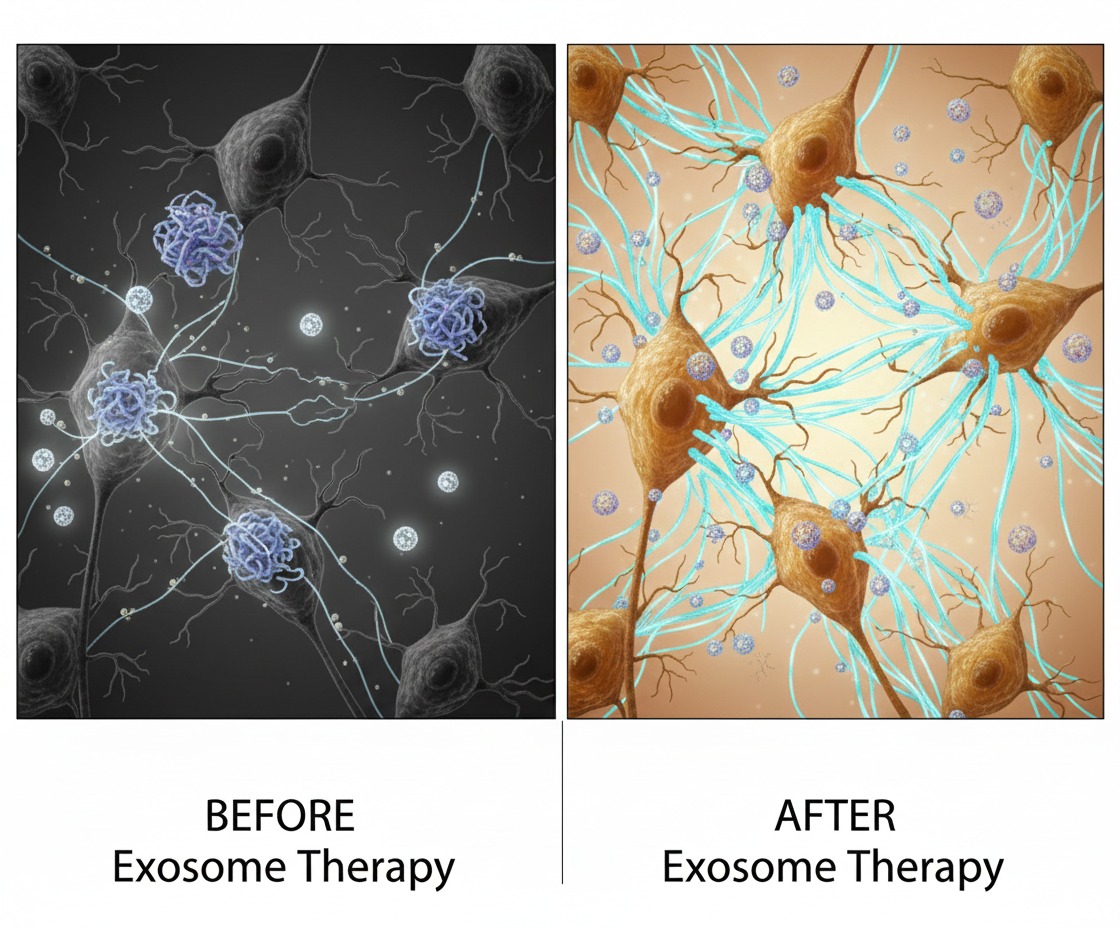
- Soothing Inflammation: By suppressing chronic inflammation in the brain, they provide an immunomodulatory effect that ensures the protection of healthy neurons [5].
- Initiating Cellular Communication: As highlighted in the Journal of Extracellular Vesicles, exosomes act as intercellular “messengers.” They cross the blood-brain barrier effectively to deliver repair signals to damaged neurons, strengthening synaptic connections [6].
- Supporting Neuroplasticity: They enhance the brain’s innate ability to reorganize itself. This isn’t just about “buying time”; it’s about helping the patient regain cognitive capacity.
- Enhancing Vascularization: They support angiogenesis (the formation of new capillaries) to ensure the brain tissue is better nourished and oxygenated [7].

The MDTurkey Philosophy: Stop the Disease, Repair the Cells, Reverse the Damage
We combine our interventional expertise from the disciplines of Anesthesiology and Intensive Care with this regenerative power at the cellular level. Our goal is not just to extend the patient’s lifespan, but to improve their quality of life sustainably.
- Halting Disease Progression: Cutting off the destructive speed of the disease at the cellular level.
- Reversing the Damage: Supporting the patient’s return to daily life—such as eating independently, recognizing loved ones, and social interaction—by repairing existing damage.
Important Note: Stem Cell and Exosome Therapies (SCET) are not a “magic wand”; they are a scientific repair process. In this process, we take a holistic approach, managing everything from the patient’s nutrition to their sleep patterns.
Frequently Asked Questions (FAQ)
While traditional medicine focuses on symptom management, Stem Cell and Exosome Therapies (SCET) aim to halt the progression of the disease at the cellular level. By reducing neuroinflammation and supporting neuronal repair, our goal is to reverse functional decline and restore a higher quality of life for the patient.
In 2026, the focus has shifted from oral medications to regenerative medicine. Stem Cell and Exosome Therapies (SCET) stand out as the most advanced options, offering a biological approach to brain repair that complements conventional protocols.
Memory loss is a result of synaptic disconnection and neuronal death. Stem Cell and Exosome Therapies (SCET) promote neuroplasticity and strengthen synaptic connections, aiming for cellular repair for memory loss rather than just temporary relief.
Exosome therapy is highly effective for neurodegenerative and neurodevelopmental conditions, including Alzheimer’s, Parkinson’s Disease, Multiple Sclerosis (MS), and Autism. It works by delivering essential signaling molecules to repair damaged brain tissues.
The cost of stem cell and Exosome therapy for Alzheimer’s varies based on the patient’s clinical stage, the concentration of the cellular product, and the number of sessions required. At MDTurkey, we provide personalized treatment protocols to ensure the most effective and sustainable outcomes.
Many families of people treated with stem cells for Alzheimer’s report significant improvements in daily living activities, increased social engagement, and stabilized cognitive functions. Our interventional expertise ensures these therapies are delivered safely to maximize success.
References
- Alzheimer’s Association (2025). 2025 Alzheimer’s Disease Facts and Figures. Alzheimer’s & Dementia.
- Hardy, J., & Higgins, G. A. Alzheimer’s disease: the amyloid cascade hypothesis. Science.
- Nature Reviews Neurology. Neuroinflammation in Alzheimer’s disease: current evidence and future directions.
- Cummings, J., et al. Alzheimer’s disease drug development pipeline: 2024-2025 update. Alzheimer’s & Dementia.
- Frontiers in Aging Neuroscience. Mesenchymal Stem Cell-Derived Exosomes: A Promising Therapeutic Strategy for Alzheimer’s Disease.
- Journal of Extracellular Vesicles. Exosomes as therapeutic delivery carriers for neurodegenerative disorders.
- Stem Cell Research & Therapy. Angiogenic potential of mesenchymal stem cells in ischemic brain repair.