Cerebral Palsy (CP) is the most common physical disability in childhood. Conventional approaches generally focus on managing symptoms and maintaining or improving the current condition through physical therapy; however, the progress achieved with these methods often remains limited.
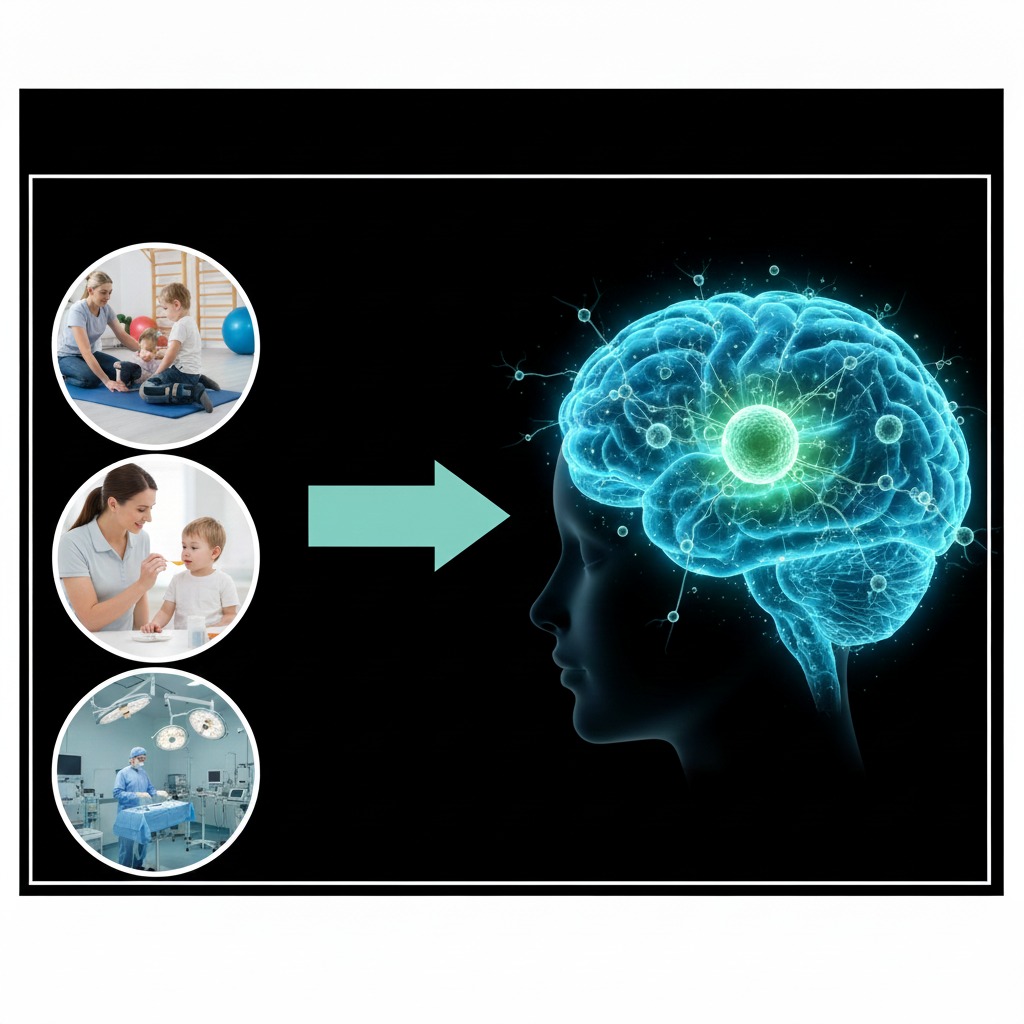
The Missing Link: Beyond Conventional Methods
Physical therapy, medical treatments, and surgical interventions are critical for reducing muscle contractions (spasticity) and maintaining range of motion. However, it must be recognized that while these methods improve symptoms, they do not repair the underlying damage to the nerve tissue in the brain.
In our approach to modern Cerebral Palsy treatment, in addition to medical treatments, physical therapies, and surgical interventions, we integrate our interventional expertise from the disciplines of Anesthesiology and Intensive Care with Stem Cell and Exosome Therapies (SCET) to support cellular repair in the brain.
Through this synergy, we achieve progress in various physical and cognitive (brain) areas, ranging from the child’s cognitive level and awareness to body posture and mobility.
Frequently Asked Questions About CP and SCET
In our current 2026 approach, we blend classical physical therapy and medical methods with Stem Cell and Exosome Therapies (SCET). This allows us to achieve significant progress in both physical and cognitive areas, including awareness, posture, and motor skills.
The cost of stem cell therapy for Cerebral Palsy is personalized based on the child’s clinical profile and the required dosage of Stem Cell and Exosome Therapies (SCET). Leveraging our interventional expertise, we deliver these cells in the safest and most effective way possible.
Families of people treated with stem cells for Cerebral Palsy often state that their children’s environmental awareness has increased, their posture has improved, and they respond much more quickly to physical therapy. Stem Cell and Exosome Therapies (SCET) open a new door where classical treatments hit a wall.
Exosomes act as “smart messengers” that cross the blood-brain barrier more easily than cells. By integrating them into our Stem Cell and Exosome Therapies (SCET) protocols, we trigger faster cellular communication and reduce neuroinflammation, which is often the biggest hurdle in CP recovery.